

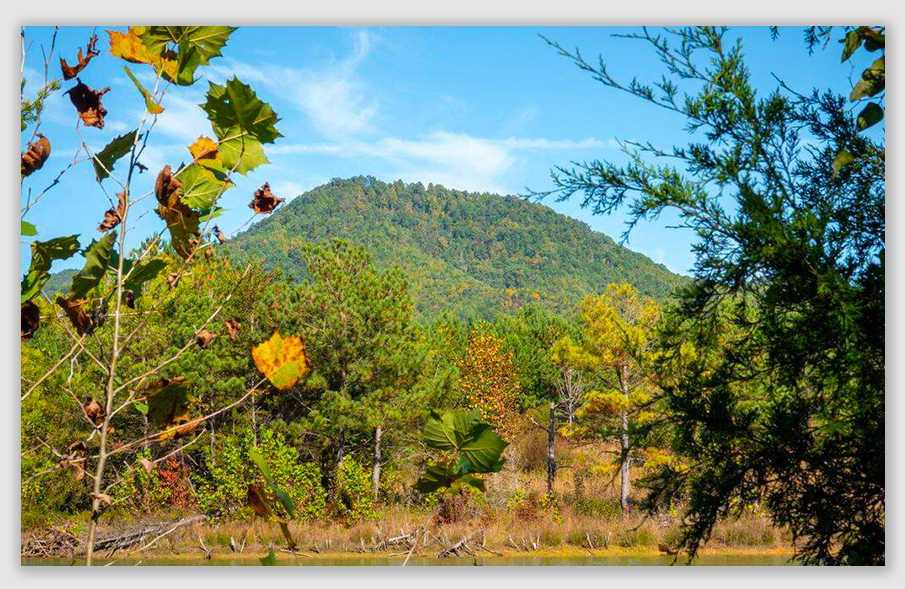
A stand of trees that survived nearly 400 years has been discovered on a 1,513-acre mountain tract purchased for preservation by the Foothills Conservancy of North Carolina. That means the oldest of oak and hickory predate the American Revolution, the Spanish Inquisition and Isaac Newton’s experiments with gravity. Five “pockets” of old growth forest were found during a survey on and around Mike Mountain, which the conservancy is adding to its Pinnacle Mountains Preserve in Rutherford County. It’s a mystery how the 200 to 300 trees dodged aggressive logging in the region, but a key factor could be the steep terrain, according to Kevin Caldwell, a conservation biologist with Mountains-to-Sea Ecological. Some of the trees stand as much as 140-feet, while others are twisted and bent due to rocky soil and lack of sunlight. Such imperfections may have kept loggers from bothering with the trees, he said…
The older inhabitants of Kinshasa can remember when trees shaded its main avenues and thick-trunked baobabs stood in front of government offices. Jean Mangalibi, 60, from his plant nursery tucked among grey tower blocks, says the capital of the Democratic Republic of the Congo’s frenzied expansion has all but erased its greenery. “We’re destroying the city,” he says, over the sound of drilling from a nearby building site. The number of trees lost in and around this vast city, the third largest in Africa, has made it all the more urgent for environmentalists to campaign to protect one of its last – and most notable. A single century-old baobab tree remains standing in the historic centre of Kinshasa – in the commune of Gombe – but it too is now under threat. Mangalibi and like-minded activists are rallying to save the symbol of the city’s past from developers…
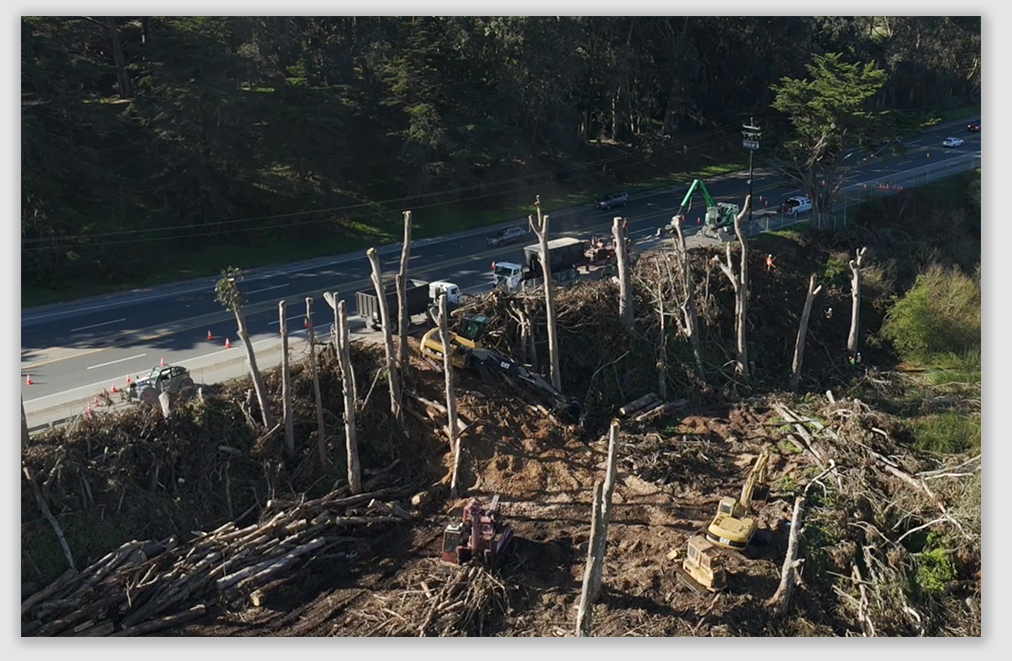
Lake Merced is an idyllic expanse of the city’s southwest corner, with three renowned golf courses and a 4.5-mile paved path for strolling. But for the last few months, the wooded shore surrounding it has been pockmarked with dead patches as the city continues its campaign to clear-cut hundreds of trees to ease regular flooding. “It looks pretty bad,” golfer Derek Hua, 31, said Wednesday of the landscaping. Of course, it was hard to feel too much sympathy for a person wrapping up a midday round at TPC Harding Park. The golfers and dogwalkers who frequent the area were split on the city-sponsored pruning. On one hand, the sight of dozens of downed eucalyptus, cypress, and acacia trees is an unpleasant reminder of the fleeting passage of life. On the other, the open spaces offer direct views of the lake from farther away…
One Toronto park is about to look a lot less green as Metrolinx moves forward with the removal of almost 330 trees in order to make room for a new Ontario Line station. In a construction notice, Metrolinx announced that in order to accommodate construction for Flemingdon Park Station, 328 trees will be removed near the E.T. Seton Park Archery Range at Don Mills Rd. and Gateway Blvd. Expected to last five weeks from its late December start date, the work is required in order to build temporary roads for safe access to the area where future piers of the new line’s elevated guideway will be built. This means the archery range will remain closed for the whole month, which doesn’t sound that bad, given it’s the winter season and not that many people are shooting arrows this time of year…
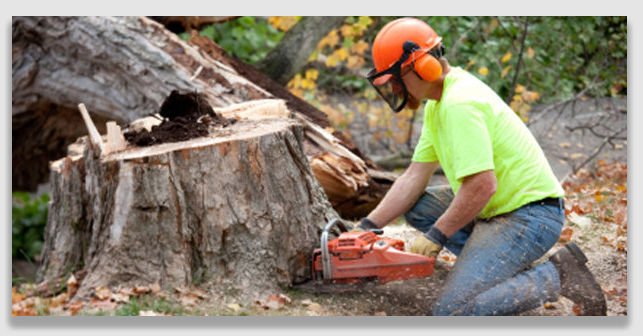 Alameda, California, Post, January 7, 2026: Tree Removal Turns into Emergency Gas Line Repair
Until a little over a week ago, there was a large and stately maple tree on Buena Vista Avenue near Walnut Street. Unfortunately, whoever planted the maple—sometime in the 1920s or earlier, based on the 3-foot-thick trunk—put it right on top of a sewer line. Eventually the tree lifted the sidewalk and clogged the sewer. The tree, however, was beautiful, and also host to several bird nests. Alameda Deputy City Manager Amy Woolridge said, “The tree was inspected by the City’s arborist in November and was determined to be in poor condition due to an insect infestation. The infestation likely resulted from prior efforts to modify the adjacent hardscape to address the ADA (Accessibility) issues. That work caused significant wounds to the tree, which then became susceptible to insects. The arborist also evaluated the possibility of additional sidewalk repairs but concluded that further work would only cause more harm to an already declining tree. Based on these findings, the tree was posted for removal on November 21, 2025…”
Trees are part of the landscape that beautify San Diego, but they can cause serious damage — and in some cases, could even be deadly — after a storm. That’s why experts recommend getting ahead of the problem. “It’s important to have trees. We need trees for shade,” Dorothy Reyes said. “They shade my mom’s house, so we have, like, three trees in the backyard and then one tree in the front yard.” Reyes loves the beauty and benefits that trees provide, but like many San Diegans, she’s also mindful of the upkeep they require and the dangers they can pose when left unmaintained. She remembers when a tree fell on top of a parking structure at the Westfield UTC mall a few years back. “One of the trees actually fell down on the property on the parking lot, like right as I went into work, and it could have hit me, and that was pretty scary,” Reyes said…
 Nature.com, January 6, 2026: Pervasive increase in tree mortality across the Australian continent
Widespread climate-driven increases in background tree mortality rates have the potential to reduce the carbon storage of terrestrial ecosystems, challenging their effectiveness as natural buffers against atmospheric CO2 enrichment with major consequences for the global carbon budget. However, the global extent of trends in tree mortality and their drivers remains poorly quantified. The Australian continent experiences one of the most variable climates on Earth and is host to a diverse range of forest biomes that have evolved high resistance to disturbance, providing a valuable test case for the pervasiveness of tree mortality trends. Here we compile an 83-year tree dynamics database (1941–2023) from >2,700 forest plots across Australia covering tropical savanna and rainforest and warm and cool temperate forests, to explore spatiotemporal patterns of tree mortality and the associated drivers. Over the past eight decades, we found a consistent trend of increasing tree mortality across the four forest biomes…
Across Australia, forests are quietly changing. Trees that once stood for decades or centuries are now dying at an accelerating rate. And this is not because of fire, storms, or logging. The chronic stress of a warming climate is killing them. Our new research draws on 83 years of records from more than 2,700 long-term forest plots. This is the most extensive dataset ever assembled of Australia’s forests. For the first time, we traced how background tree mortality – the slow, natural turnover of trees through time – has shifted across an entire continent. The results reveal tree mortality has been climbing steadily for more than 80 years, across all types of forests. This is not just an Australian story. Similar increases in tree mortality have been recorded in the Amazon, Europe, and North America. Together, these independent observations point to a systemic shift. The planet’s forests, once reliable carbon sinks, are losing their capacity to buffer climate change…

Controversy over the removal of an iconic tree in Lyon Park is prompting an in-person conversation between neighborhood civic leaders and county leadership. An aide for County Board Chair Takis Karantonis acknowledged some community members’ frustration in a Dec. 29 follow-up with Natalie Roy, who leads the Lyon Park Citizens Association. Karantonis “would like to offer a meeting to discuss this matter,” Sandra Calixto-Mendoza said in the letter to Roy. The 40-year-old tree in question, located in a median in the 300 block of N. Fillmore Street, was removed between Dec. 11 and 12 after the county’s arborist found it was diseased and posed a threat to those walking or driving near it. Prior to the removal, leaders of the Lyon Park Citizens Association had sent county officials a letter on Nov. 20 in an effort to preserve the tree. The association offered to fund a second opinion from an independent source on its health…
The Patrick Leahy Lake Champlain Basin Program is looking for people’s plans to boost native tree nurseries. The program, in partnership with Northeast Interstate Water Pollution Control Commission, is offering money for projects that can increase the supply of native plants available for habitat conservation work that benefits Lake Champlain, according to a press release. Funding will support organizations in the U.S. that can sell or grow native trees and shrubs for conservation planting projects in the basin. Awarded funding may be used for infrastructure investments and workforce development, with the aim of increasing capacity and reducing the cost of projects within the basin. “Restoring habitat across the Lake Champlain basin benefits water quality, wildlife and our communities — and requires a robust supply of native trees and shrubs,” said Eric Howe, who directs basin program efforts with the regional commission. “This funding opportunity will support tree nurseries to increase their production while keeping costs stable for conservation partners…”
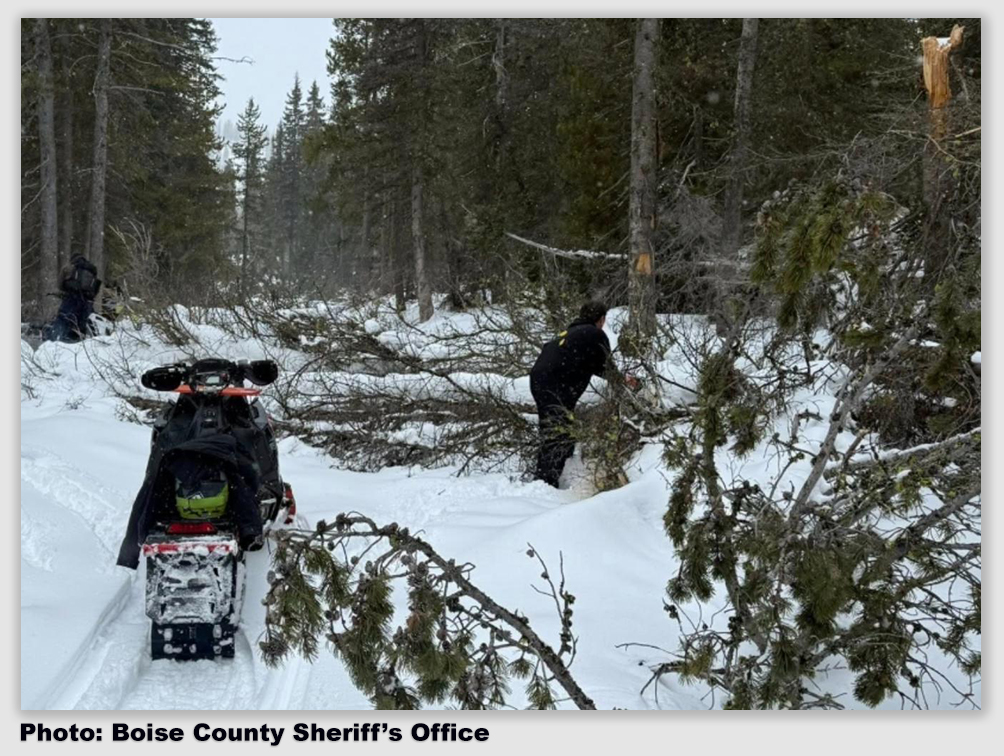
Winter riders looking to hit the snow at Pilot Peak and Mores Creek Summit in Boise County should avoid the area due to poor snow conditions and downed trees. Boise County Grooming 8A, a group that maintains snowmobile trails and winter parking lots, said it was astonished by how many trees had fallen in the area Thursday. “These are not little ones either,” officials said on social media. “There is hundreds and hundreds of trees down all over, I have never seen anything like it. There is no way to cut them all, we need multiple feet of snow to cover a lot of them.” Boise County officials said even if it gets good snowfall, the area will be challenging to groom, as “[they] are going to need a lot of snow to be able to groom over and around this huge mess. In the 39 years of riding Mores Creek area I have never seen anything close to what we seen today,” Boise County Grooming 8A said…
You’ve seen them throughout the Columbia area — trees that have been trimmed into odd shapes in order to provide clearance for utility lines. If you’ve ever wondered about the process behind those trims, you might be interested in attending a public meeting to be held by City of Columbia’s Forestry and Beautification Department and Dominion Energy. The public meeting, scheduled for 6-7 p.m. Thursday, January 15, at Martin Luther King Jr Park at 2300 Greene Street will have representatives from the city and the utility to answer questions and discuss the Purpose and Guidelines for Utility Pruning, ANSI Standards, Grand Trees, and Columbia’s Aging Tree Canopy…

 Tree and Neighbor Law For Homeowners and Professionals